Fúxī

Chinese tradition. See the whole pantheon.

Domains
hunting, writing the trigrams, marriage
Symbols and attributes
Square; trigrams
Partner
Nǚwā
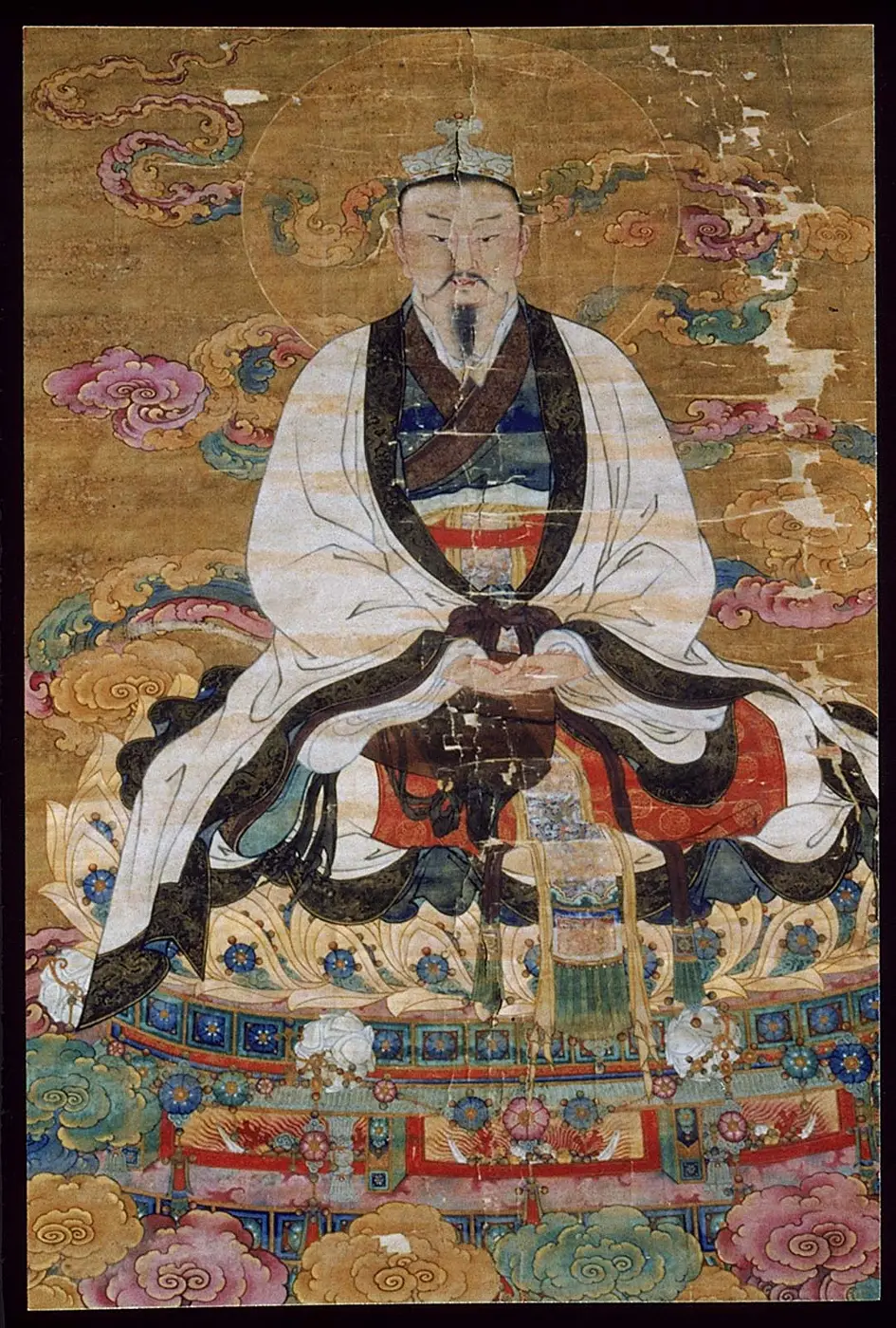
The Jade Emperor, a Ming dynasty painting.

Key myth

A culture hero credited with inventing the eight trigrams, nets and cooking. Han dynasty reliefs show him with a serpent's tail, entwined with Nüwa.

Where sources differ or caution applies. The pair as brother and sister, married, is first recorded in the Tang dynasty; earlier texts treat them separately.
Primary sources

  • Yijing, Xici zhuan
  • Han tomb reliefs

All sources for the Chinese pantheon

Place in the family graph

Choose a deity to see where it comes from. Dashed lines are links the sources describe that are not parent and child.

PángǔFúxīNǚwāYellow EmperorShénnóngHòu YìCháng'éQueen Mother of the WestJade EmperorKitchen GodGuan YuMazuDragon KingsYanluo

More traditions

Elsewhere in the world

Deities in other traditions who share a theme with Fúxī: creation and first beings, wisdom, writing and divination. This is overlap in one area only.

Norse

Ymir

first giant, raw material of the world

Norse

Búri

first of the gods

Norse

Borr

father of Odin, Vili and Vé

Norse

Odin

wisdom, poetry, war

Norse

Frigg

foresight, marriage, motherhood

Egyptian

Nun

the primeval waters

Compare across cultures