Egyptian
Nile Valley, c. 3000 BCE to the Roman period.
There was no single Egyptian creation story. Different temple centres taught different ones: Heliopolis with Atum and the Ennead, Memphis with Ptah, Hermopolis with the Ogdoad, Thebes with Amun. Gods merge (Amun-Ra) and take many forms, so a single family tree is always a simplification.
Family graph
Parent lines run downward, partners are joined by a thicker line. Select a deity to trace its ancestry.
The deities
Nunthe primeval watersAtumcreator, the completed oneRasun, kingship, orderShuair, sunlightTefnutmoisture, the lion's rageGebearthNutsky, starsOsirisafterlife, resurrection, fertility of the floodIsismagic, protection, motherhoodSethstorm, desert, chaosNephthysmourning, protection of the deadHoruskingship, skyAnubisembalming, guide of the deadThothwriting, moon, wisdomMaattruth, order, justiceHathorlove, music, joySekhmetwar, plague, healingPtahcraftsmen, creation by speechSobekNile, fertility, kingshipAmunthe hidden, king of the gods in the New Kingdom
Today
Ancient Egyptian religion ended as Christianity and then Islam became dominant in the first millennium CE. A small number of modern Kemetic reconstructionist groups practise it today; they are not continuous with the ancient cult.
More traditions
Sources used
- Pyramid Texts (Old Kingdom royal tombs, c. 2400-2300 BCE)
- Coffin Texts (Middle Kingdom)
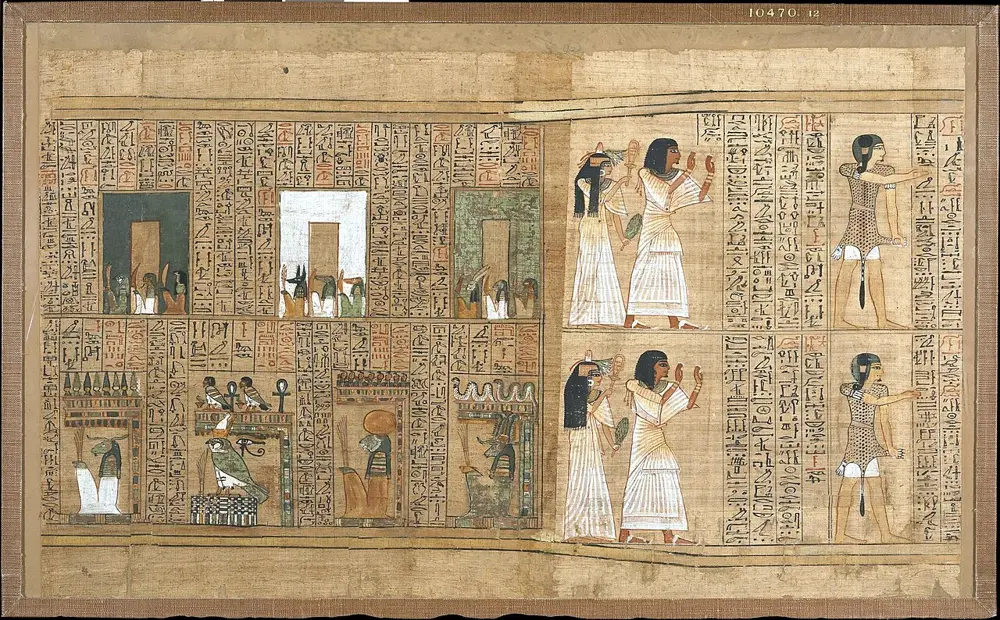
- Book of the Dead / Book of Going Forth by Day (New Kingdom papyri, e.g. Papyrus of Ani)
- Shabaka Stone (Memphite Theology, copied c. 700 BCE)
- Plutarch, De Iside et Osiride (c. 100 CE; a Greek outsider's account)