Norse
Scandinavia and Iceland.
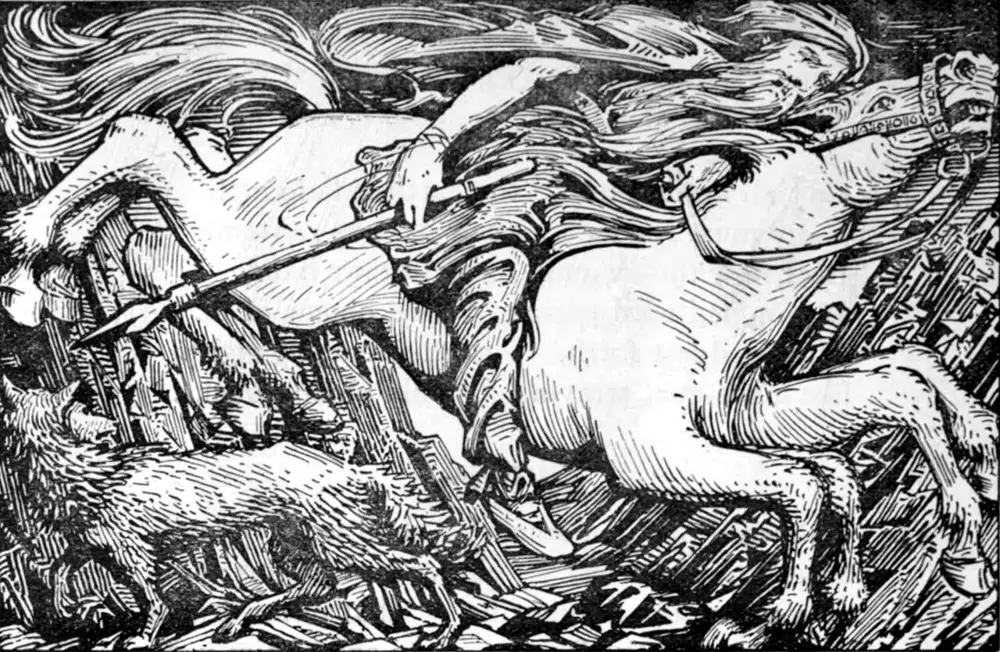
Our Norse picture is overwhelmingly Icelandic and 13th-century: the Poetic Edda (a collection of older verse preserved in the Codex Regius) and Snorri Sturluson's Prose Edda, written by a Christian who treated the myths as a poet's inheritance. Gods are in two kindreds, the Æsir and the Vanir, who once fought a war and exchanged hostages.
Family graph
Parent lines run downward, partners are joined by a thicker line. Select a deity to trace its ancestry.
The deities
Ymirfirst giant, raw material of the worldBúrifirst of the godsBorrfather of Odin, Vili and VéBestlamother of OdinOdinwisdom, poetry, warFriggforesight, marriage, motherhoodThorthunder, protection of gods and people, strengthSifgolden hair, grain (by later reading)Baldrlight, beauty, mercyLokitrickery, shape-changingSigynloyaltyHelthe dead who die of sickness or ageNjörðrsea, wind, wealthFreyrpeace, fertility, sunshineFreyjalove, desire, magic (seiðr)Heimdallrwatchman of the godsTýrlaw, oaths, warÆgirthe sea, brewer of the gods' aleRándrowning, the sea's netSólthe sun
Today
Norse religion was displaced by Christianity between roughly the 9th and 12th centuries. Today it is practised by modern Heathen and Ásatrú communities, notably in Iceland, where Ásatrúarfélagið is a registered religious body.
More traditions
Sources used
- Poetic Edda (Codex Regius, c. 1270): Völuspá, Vafþrúðnismál, Grímnismál, Lokasenna, Þrymskviða, Skírnismál
- Snorri Sturluson, Prose Edda (c. 1220): Gylfaginning, Skáldskaparmál
- Snorri Sturluson, Ynglinga saga (Heimskringla)