Odin

Also: Óðinn

Norse tradition. See the whole pantheon.
Domains
wisdom, poetry, war, death, magic
Symbols and attributes
Spear Gungnir, ravens Huginn and Muninn, wolves, the eight-legged horse Sleipnir
Parents (per the sources used)
Borr and Bestla
Partner
Frigg
Children
Thor, Baldr
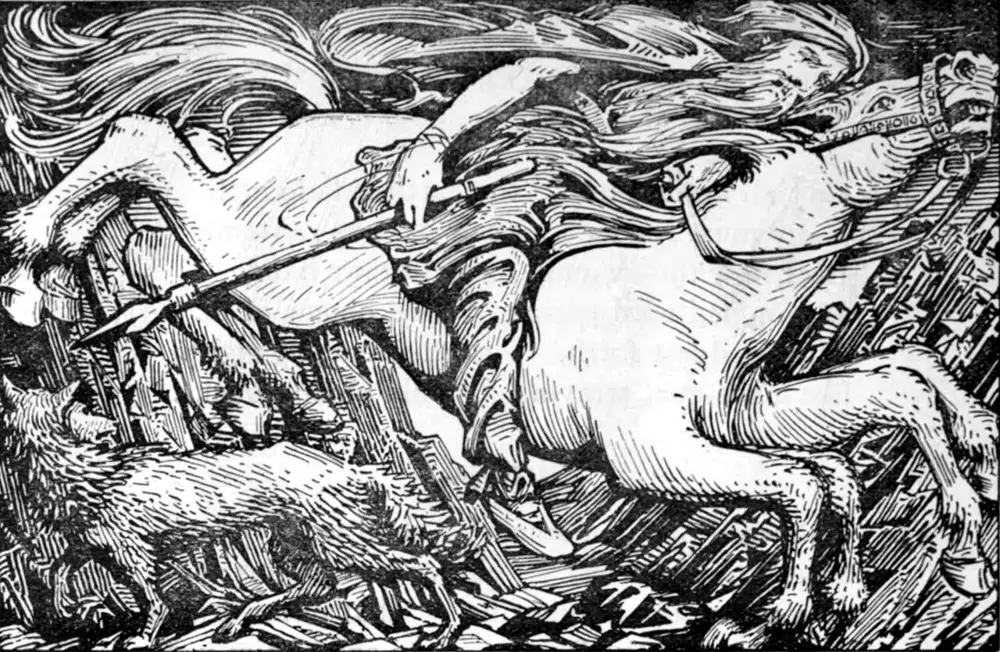
Odin rides to Hel, W. G. Collingwood, after the Poetic Edda.

Key myth

Odin gave an eye at Mímir's well to drink wisdom, and hung himself nine nights on the tree in order to take up the runes. He gathers the slain to Valhalla and is fated to be swallowed by the wolf Fenrir at Ragnarök.

Where sources differ or caution applies. Snorri makes Odin the chief god. Older poems show Thor and Freyr as at least as widely worshipped, and the Icelandic sources reflect their own time and place.

Primary sources

  • Völuspá 28
  • Hávamál 138-139
  • Grímnismál

All sources for the Norse pantheon

Lineage in the sources used: Borr, Búri, Bestla.

Place in the family graph

Choose a deity to see where it comes from. Dashed lines are links the sources describe that are not parent and child.

YmirFriggBúriNjörðrÆgirRánSólBorrBestlaFreyrFreyjaSifLokiSigynHeimdallrTýrOdinHelThorBaldr

More traditions

Elsewhere in the world

Deities in other traditions who share a theme with Odin: wisdom, writing and divination, war and fighting, death and the underworld. This is overlap in one area only.

Egyptian

Nut

sky, stars

Egyptian

Osiris

afterlife, resurrection, fertility of the flood

Egyptian

Isis

magic, protection, motherhood

Egyptian

Seth

storm, desert, chaos

Egyptian

Nephthys

mourning, protection of the dead

Egyptian

Horus

kingship, sky

Egyptian

Anubis

embalming, guide of the dead

Egyptian

Thoth

writing, moon, wisdom

Compare across cultures