Chinese
China and its diaspora, from the Shang period onward.
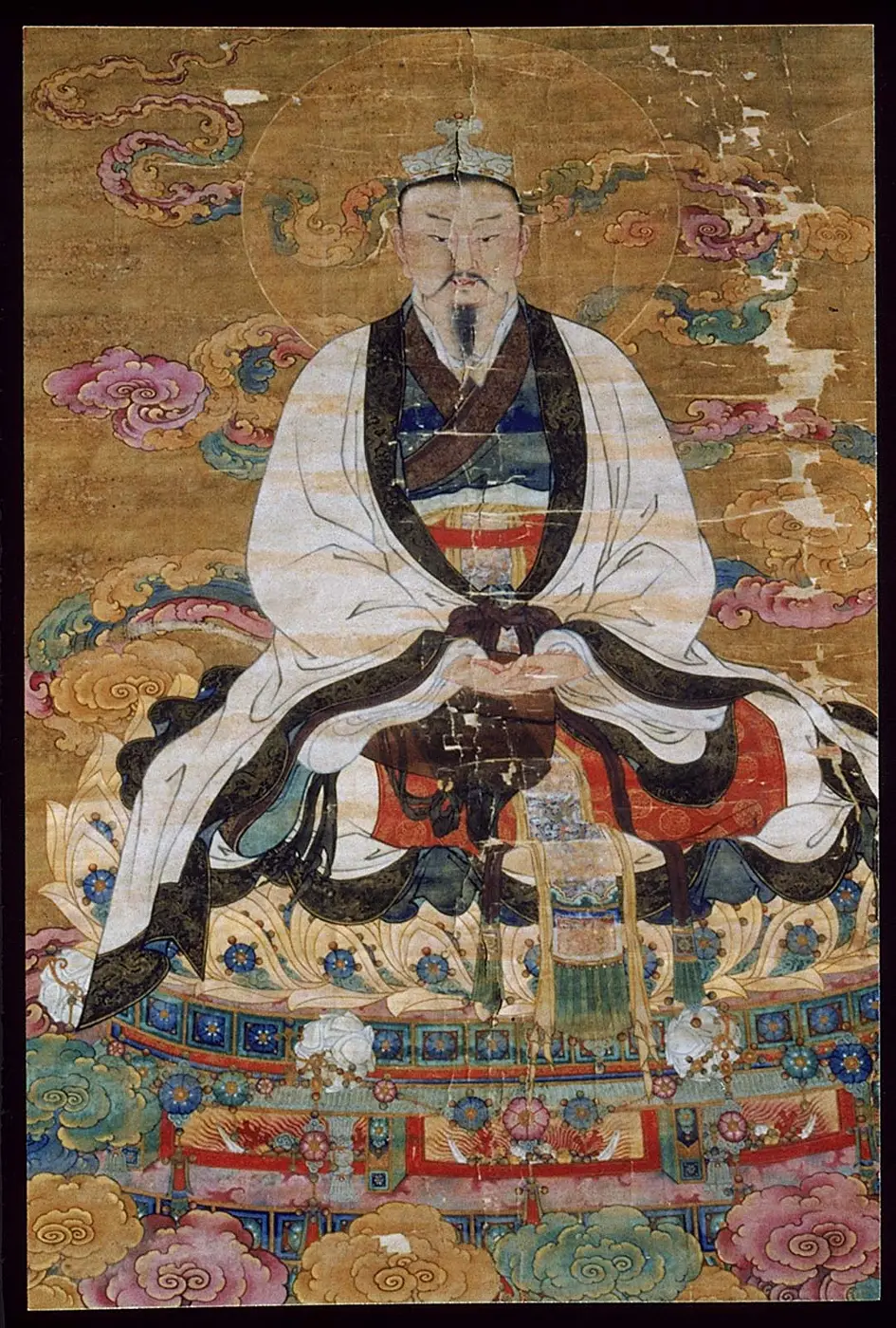
Chinese tradition has no single mythology. Early texts (Shanhaijing, Huainanzi) preserve fragments; the later bureaucratic heaven under the Jade Emperor is systematised in Song-to-Ming literature, notably Fengshen Yanyi. Many deities are deified humans, so the line between history and religion is deliberately porous. Kinship between them varies by text and region.
Family graph
Parent lines run downward, partners are joined by a thicker line. Select a deity to trace its ancestry.
The deities
Today
Chinese folk religion, Daoism and Chinese Buddhism are practised by hundreds of millions in China, Taiwan, Southeast Asia and worldwide. Deities such as Mazu, Guan Yu and the Kitchen God receive offerings in homes and temples today.
More traditions
Sources used
- Shanhaijing (Classic of Mountains and Seas, Warring States to Han)
- Huainanzi (139 BCE)
- Sima Qian, Shiji (Records of the Grand Historian)
- Xu Zheng, Sanwu liji (3rd century CE): first account of Pangu
- Fengshen Yanyi (Investiture of the Gods, 16th century)
- Journey to the West (16th century)