Hindu
South Asia and its diaspora, from the Vedic period (c. 1500 BCE) to now.
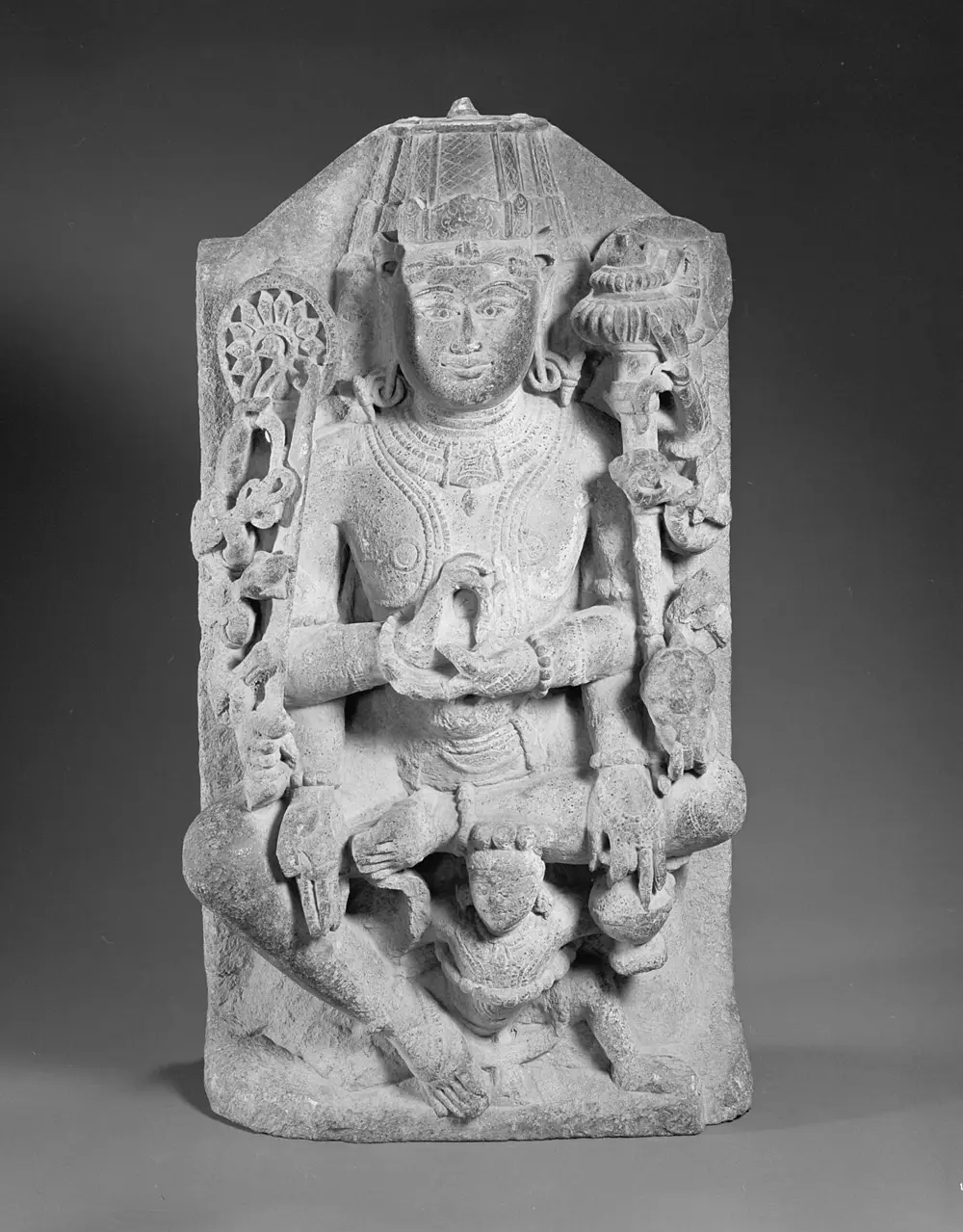
The Vedic gods of the Rigveda (Indra, Agni, Varuna) differ from the Puranic gods (Vishnu, Shiva, Devi) who dominate worship today, though the lines are not clean. Genealogies in the Puranas differ between texts and between traditions, and the relationships shown here are those most widely told, not a single canonical tree.
Family graph
Parent lines run downward, partners are joined by a thicker line. Select a deity to trace its ancestry.
The deities
Today
Hinduism is a living religion with about 1.2 billion followers. Deities here are not 'myths' for the people who worship them; they are worshipped daily in homes and temples, and different traditions (Vaishnava, Shaiva, Shakta, Smarta) see different deities as supreme or as forms of one reality.
More traditions
Sources used
- Rigveda (c. 1500-1200 BCE)
- Upanishads
- Mahabharata and Ramayana
- Puranas, e.g. Vishnu Purana, Shiva Purana, Bhagavata Purana
- Devi Mahatmya (Markandeya Purana)