Quetzalcoatl

Aztec (Mexica) tradition. See the whole pantheon.

Domains
wind, learning, priesthood, the morning star
Symbols and attributes
Feathered serpent; conch
Parents (per the sources used)
Ometeotl
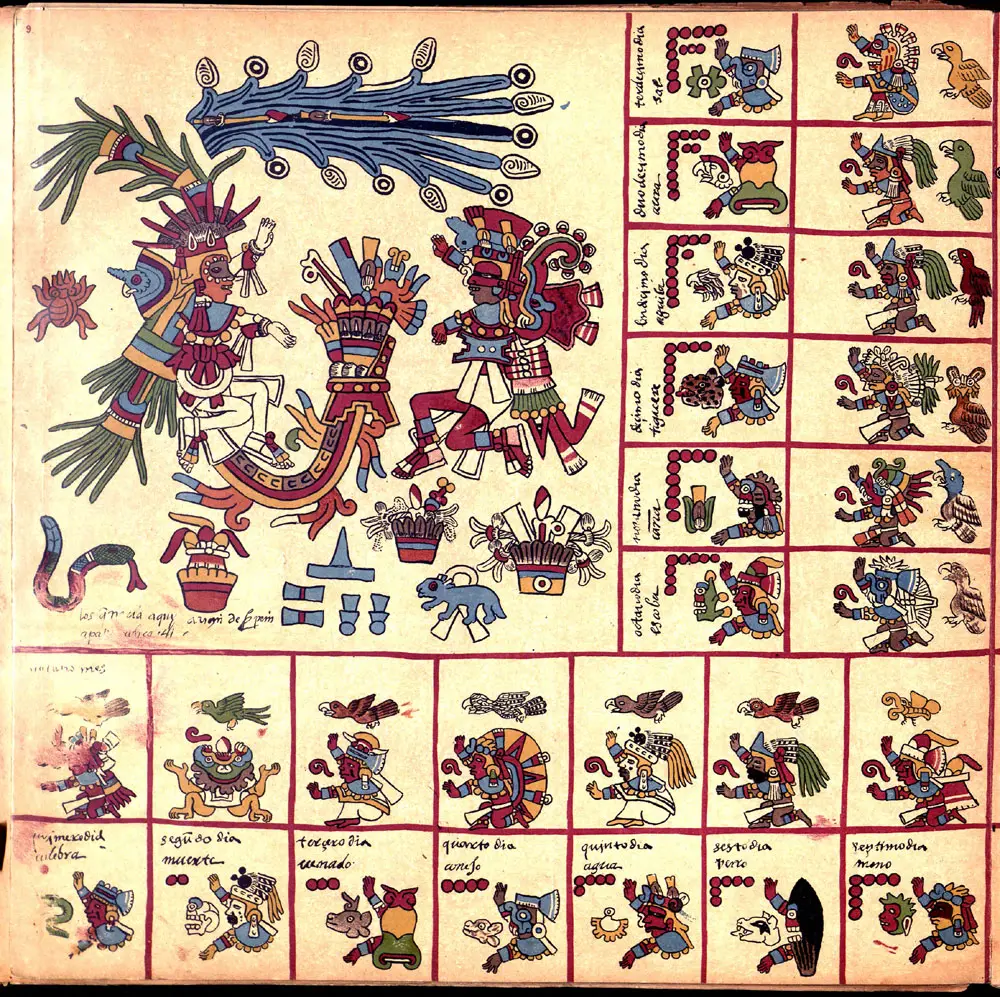
Codex Borbonicus, p. 9, a Mexica calendar book painted around the time of the Spanish conquest.

Key myth

In the Legend of the Suns he descends to Mictlan to retrieve the bones of earlier humans and sheds blood on them to make the present people.

Where sources differ or caution applies. The story that Cortés was mistaken for Quetzalcoatl comes from post-conquest sources and is doubted by historians.

Primary sources

  • Leyenda de los Soles
  • Florentine Codex Book 3

All sources for the Aztec (Mexica) pantheon

Lineage in the sources used: Ometeotl.

Place in the family graph

Choose a deity to see where it comes from. Dashed lines are links the sources describe that are not parent and child.

OmeteotlTezcatlipocaQuetzalcoatlCoatlicueTlalocChalchiuhtlicueMictlantecuhtliMictecacihuatlXipe TotecXochiquetzalHuitzilopochtliCoyolxauhquiTonatiuh

More traditions

Elsewhere in the world

Deities in other traditions who share a theme with Quetzalcoatl: wisdom, writing and divination, sky, storm and thunder, creation and first beings. This is overlap in one area only.
Norse

Ymir

first giant, raw material of the world

Norse

Búri

first of the gods

Norse

Borr

father of Odin, Vili and Vé

Norse

Odin

wisdom, poetry, war

Norse

Frigg

foresight, marriage, motherhood

Norse

Thor

thunder, protection of gods and people, strength

Norse

Freyr

peace, fertility, sunshine

Compare across cultures