Ometeotl

Also: Ometecuhtli and Omecihuatl

Aztec (Mexica) tradition. See the whole pantheon.

Domains
duality, the creative pair
Children
Tezcatlipoca, Quetzalcoatl
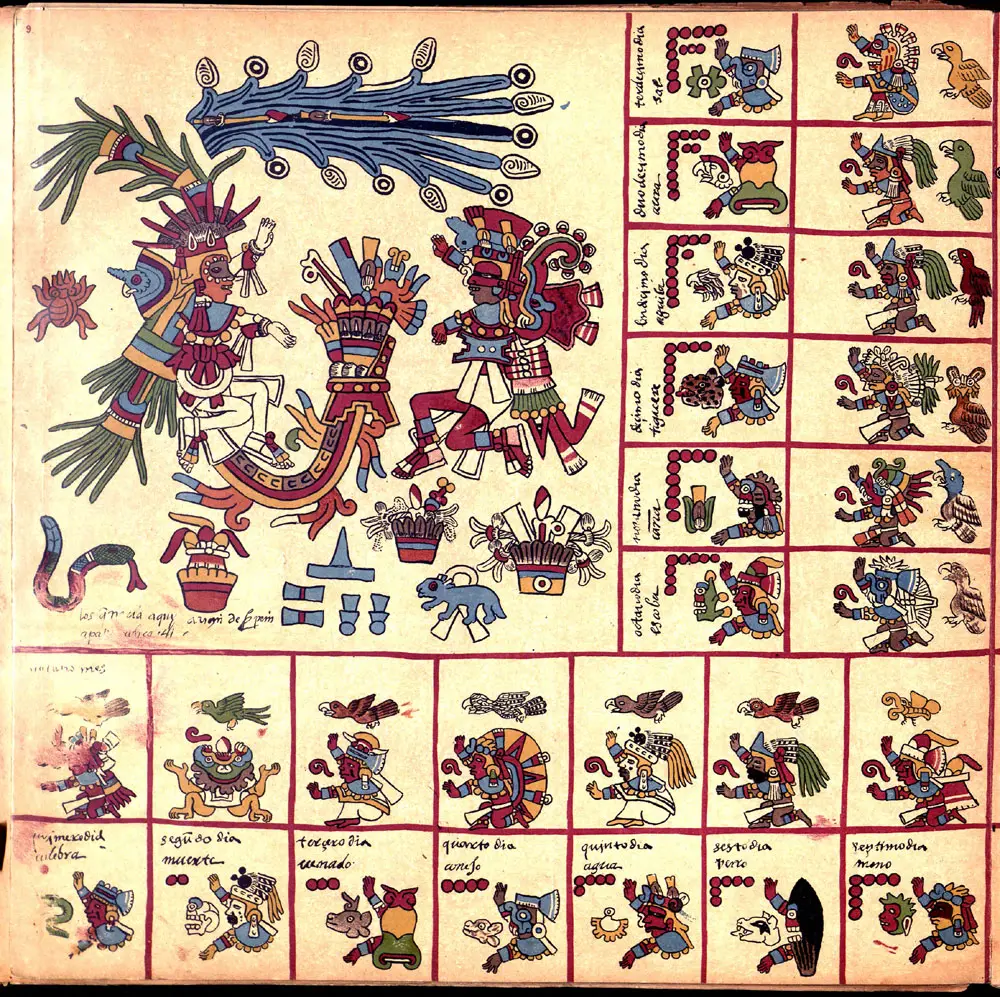
Codex Borbonicus, p. 9, a Mexica calendar book painted around the time of the Spanish conquest.

Key myth

A dual god, 'Lord and Lady of Duality', dwelling in the highest heaven in some accounts. In the Histoyre du Mechique, the pair have four sons: the red Tezcatlipoca, the black Tezcatlipoca, Quetzalcoatl and Huitzilopochtli.

Where sources differ or caution applies. Some modern scholars (notably Miguel León-Portilla) read Ometeotl as an abstract supreme deity; others think this overstates a sparse source base.
Primary sources

  • Histoyre du Mechique
  • Florentine Codex Book 6

All sources for the Aztec (Mexica) pantheon

Place in the family graph

Choose a deity to see where it comes from. Dashed lines are links the sources describe that are not parent and child.

OmeteotlTezcatlipocaQuetzalcoatlCoatlicueTlalocChalchiuhtlicueMictlantecuhtliMictecacihuatlXipe TotecXochiquetzalHuitzilopochtliCoyolxauhquiTonatiuh

More traditions

Elsewhere in the world

Deities in other traditions who share a theme with Ometeotl: creation and first beings. This is overlap in one area only.

Norse

Ymir

first giant, raw material of the world

Norse

Búri

first of the gods

Norse

Borr

father of Odin, Vili and Vé

Egyptian

Nun

the primeval waters

Egyptian

Atum

creator, the completed one

Egyptian

Ra

sun, kingship, order

Egyptian

Ptah

craftsmen, creation by speech

Compare across cultures