Týr

Norse tradition. See the whole pantheon.
Domains
law, oaths, war
Symbols and attributes
One hand; the wolf Fenrir
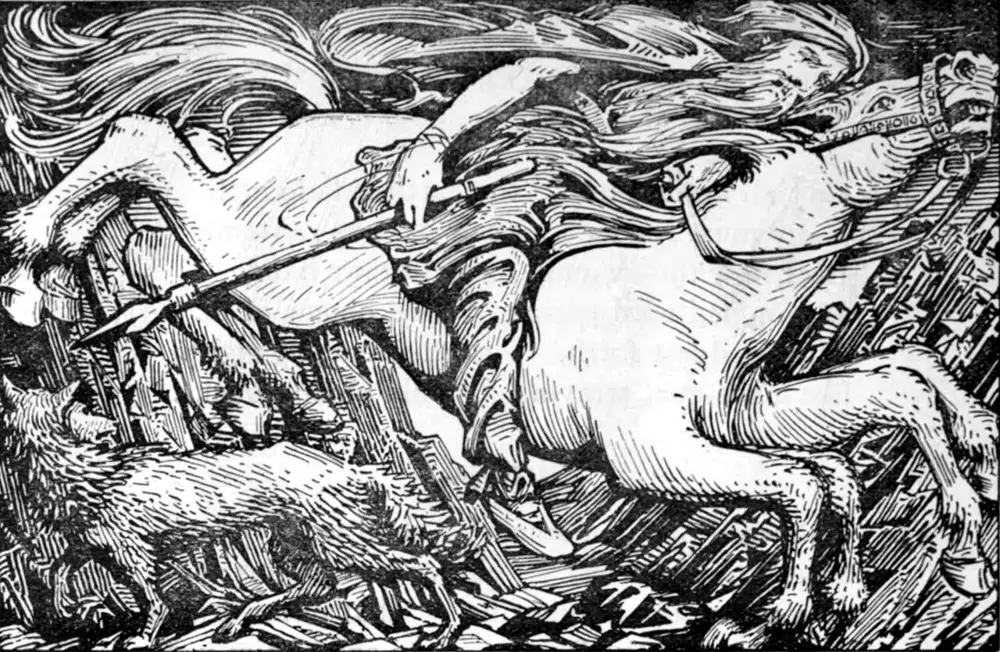
Odin rides to Hel, W. G. Collingwood, after the Poetic Edda.

Key myth

He put his hand in the wolf Fenrir's mouth as a pledge when the gods bound the beast with a magical ribbon. Fenrir bit it off when he found himself deceived.

Where sources differ or caution applies. Hymiskviða makes him Hymir's son; Gylfaginning does not name his father. Many scholars think he was once a far more central sky god.

Primary sources

  • Gylfaginning 25, 34
  • Hymiskviða

All sources for the Norse pantheon

Place in the family graph

Choose a deity to see where it comes from. Dashed lines are links the sources describe that are not parent and child.

YmirFriggBúriNjörðrÆgirRánSólBorrBestlaFreyrFreyjaSifLokiSigynHeimdallrTýrOdinHelThorBaldr

More traditions

Elsewhere in the world

Deities in other traditions who share a theme with Týr: war and fighting. This is overlap in one area only.

Egyptian

Seth

storm, desert, chaos

Egyptian

Horus

kingship, sky

Egyptian

Sekhmet

war, plague, healing

Mesopotamian

Enlil

wind, command, the fates of cities

Mesopotamian

Nergal

plague, war, the underworld

Mesopotamian

Ninurta

war, farming, storms

Hindu

Indra

thunder, rain, kingship of the Vedic gods

Compare across cultures