Atum

Egyptian tradition. See the whole pantheon.

Domains
creator, the completed one
Symbols and attributes
Double crown; the primeval mound; the scarab, in the form Khepri
Parents (per the sources used)
Nun
Children
Shu, Tefnut
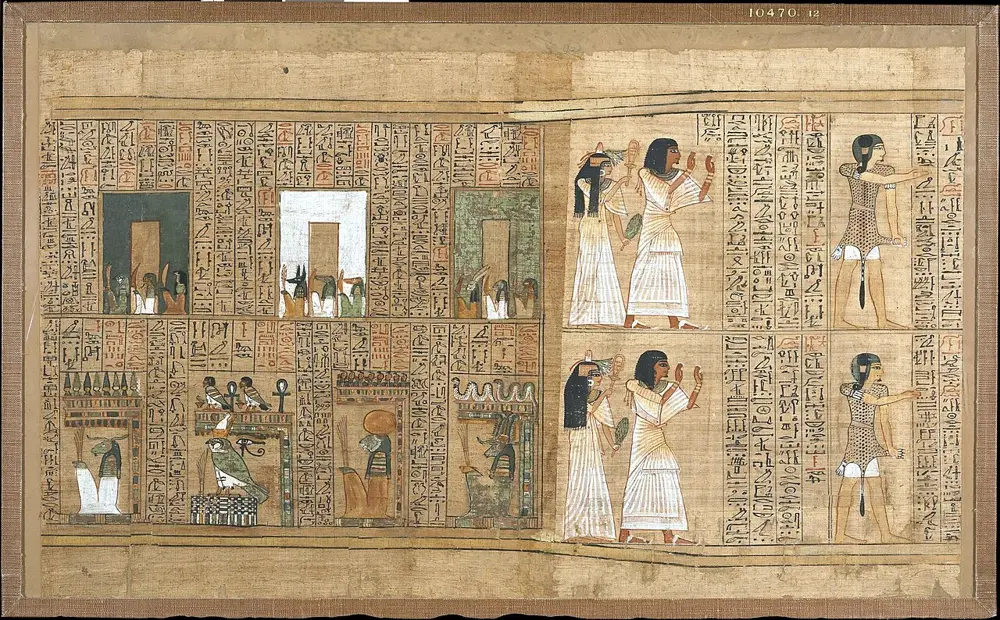
Papyrus of Ani, British Museum (New Kingdom), a Book of the Dead.

Key myth

Atum emerged from Nun on the primeval mound and made Shu and Tefnut from himself (the Pyramid Texts say he spat them out; the Memphite theology gives Ptah the same creative role through speech).

Where sources differ or caution applies. Atum was merged with the sun god as Ra-Atum, the setting sun.
Primary sources

  • Pyramid Texts Utterance 600
  • Shabaka Stone

All sources for the Egyptian pantheon

Lineage in the sources used: Nun.

Place in the family graph

Choose a deity to see where it comes from. Dashed lines are links the sources describe that are not parent and child.

NunAtumRaAmunShuTefnutMaatHathorSekhmetPtahGebNutAnubisThothSobekOsirisIsisSethNephthysHorus

More traditions

Elsewhere in the world

Deities in other traditions who share a theme with Atum: creation and first beings, the sun and light. This is overlap in one area only.

Norse

Ymir

first giant, raw material of the world

Norse

Búri

first of the gods

Norse

Borr

father of Odin, Vili and Vé

Mesopotamian

Nammu

the primeval sea, mother of the gods

Mesopotamian

Apsu

fresh water below the earth

Mesopotamian

Tiamat

salt water, primordial mother

Compare across cultures