Osiris

Egyptian tradition. See the whole pantheon.

Domains
afterlife, resurrection, fertility of the flood
Symbols and attributes
Crook and flail, green skin, Atef crown
Parents (per the sources used)
Geb and Nut
Partner
Isis
Children
Horus
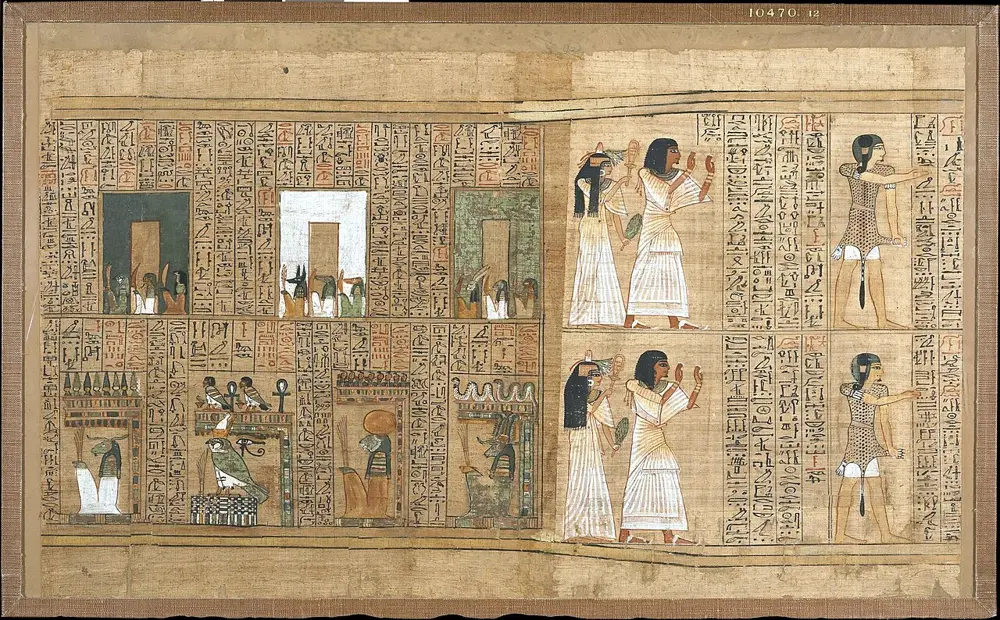
Papyrus of Ani, British Museum (New Kingdom), a Book of the Dead.

Key myth

Killed by his brother Seth and later restored by Isis, Osiris became king of the dead. Every deceased person hoped to become 'an Osiris'. His story appears in fragments in the Egyptian texts and in full only in Plutarch.

Where sources differ or caution applies. The sources: the Pyramid Texts allude to the murder; the continuous story is Plutarch's Greek version.
Primary sources

  • Pyramid Texts Utterance 219-222
  • Plutarch, De Iside 13-19

All sources for the Egyptian pantheon

Lineage in the sources used: Geb, Shu, Atum, Nun, Tefnut, Nut.

Place in the family graph

Choose a deity to see where it comes from. Dashed lines are links the sources describe that are not parent and child.

NunAtumRaAmunShuTefnutMaatHathorSekhmetPtahGebNutAnubisThothSobekOsirisIsisSethNephthysHorus

More traditions

Elsewhere in the world

Deities in other traditions who share a theme with Osiris: death and the underworld, earth, harvest and fertility. This is overlap in one area only.

Norse

Odin

wisdom, poetry, war

Norse

Sif

golden hair, grain (by later reading)

Norse

Baldr

light, beauty, mercy

Norse

Hel

the dead who die of sickness or age

Norse

Freyr

peace, fertility, sunshine

Norse

Freyja

love, desire, magic (seiðr)

Norse

Rán

drowning, the sea's net

Mesopotamian

Ninlil

grain, wind (as Enlil's wife)

Compare across cultures