Inanna / Ishtar

Mesopotamian tradition. See the whole pantheon.

Domains
love, war, the morning and evening star
Symbols and attributes
Eight-pointed star; lion; rosette
Parents (per the sources used)
Nanna / Sin
Partner
Dumuzi / Tammuz
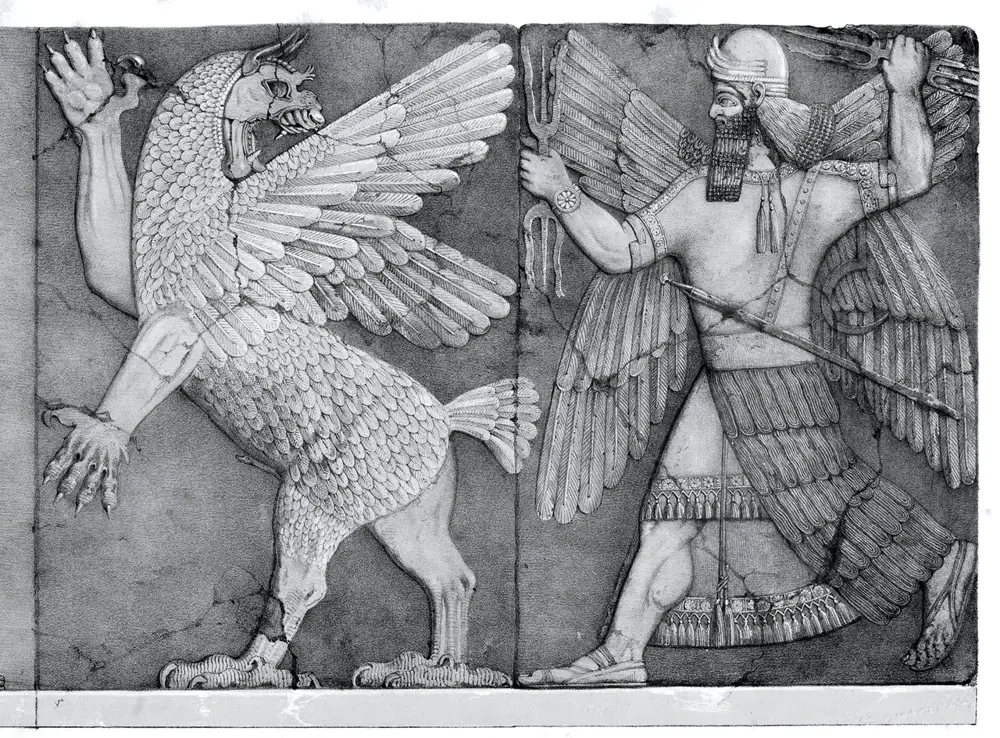
A chaos monster and a sun god, drawn by L. Gruner for A. H. Layard's Monuments of Nineveh.

Key myth

In 'Inanna's Descent' she goes to the underworld, is stripped and killed, and is revived by Enki's agents. She can leave only if another takes her place, and she chooses Dumuzi.

Where sources differ or caution applies. Her father is Nanna in most texts, but An and Enki appear in others. The Akkadian Ishtar absorbs her.
Primary sources

  • Inanna's Descent (ETCSL 1.4.1)
  • Epic of Gilgamesh VI

All sources for the Mesopotamian pantheon

Lineage in the sources used: Nanna / Sin, Enlil, An / Anu, Ninlil.

Place in the family graph

Choose a deity to see where it comes from. Dashed lines are links the sources describe that are not parent and child.

NammuApsuTiamatAn / AnuNinhursagEnlilNinlilEnki / EaNinurtaNanna / SinNergalEreshkigalMardukUtu / ShamashInanna / IshtarDumuzi / Tammuz

More traditions

Elsewhere in the world

Deities in other traditions who share a theme with Inanna / Ishtar: love, desire and fertility, war and fighting. This is overlap in one area only.

Norse

Odin

wisdom, poetry, war

Norse

Thor

thunder, protection of gods and people, strength

Norse

Freyr

peace, fertility, sunshine

Norse

Freyja

love, desire, magic (seiðr)

Norse

Týr

law, oaths, war

Egyptian

Seth

storm, desert, chaos

Egyptian

Horus

kingship, sky

Egyptian

Hathor

love, music, joy

Compare across cultures